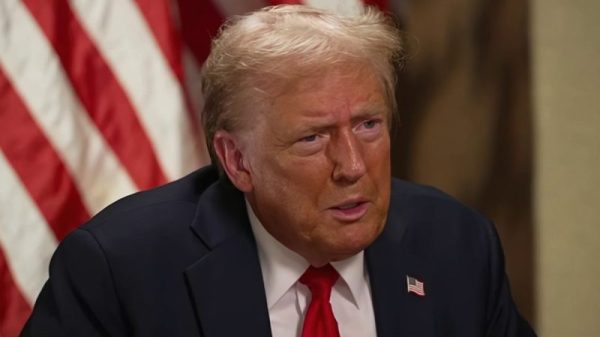
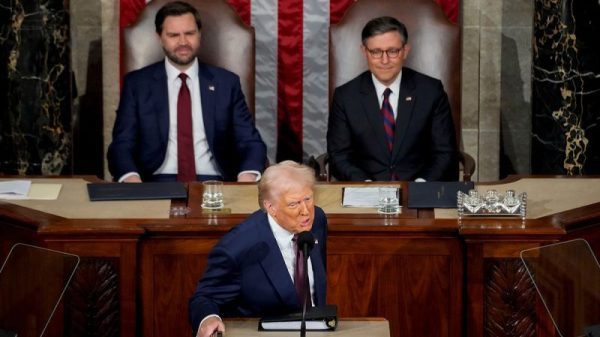







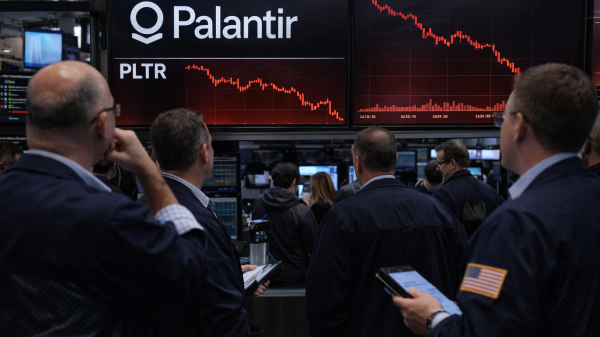





In a landmark 6-3 decision that has sent shockwaves through global financial markets, the Supreme Court struck down President Trump’s sweeping global tariffs on Friday, ruling the administration “overstepped its constitutional authority” as it used emergency powers to bypass Congress.
Software stocks, as represented by “IGV” or the iShares Expanded Tech-Software Sector exchange-traded fund (ETF), are inching higher in response as part of a broader “relief rally”.
At the time of writing, it’s up some 2.0% versus the market open.
However, a deeper dive into the mechanics of this rally suggests it’s built on a “foundation of sand.”
The sudden pivot to optimism largely ignores a trio of “major threats” that have nothing to do with tariffs.
AI disruption fears remain an overhang for software stocks
The primary reason a tariff-driven surge in software stocks makes little sense is the still looming “SaaSpocalypse”.
For years, the software-as-a-service (SaaS) model has been the “gold standard” of predictable revenue, driven by per-seat licensing.
However, the rapid ascent of Agentic AI has fundamentally broken that math.
Investors are increasingly terrified that autonomous AI agents – like the latest models released by Anthropic and OpenAI – will soon replace the human users who fill those seats.
If an artificial intelligence agent can autonomously manage a CRM or update project boards, the need for dozens of human licenses evaporates.
And the removal of tariffs does nothing to protect legacy giants like Salesforce or Atlassian from this structural erosion of pricing power.
In this light, a 2% bump feels like a distraction from a much more significant threat to the sector’s core identity.
Oil, Iran, and the risk-off sentiment
While the Supreme Court may have lowered the “trade tax”, geopolitical tensions are simultaneously hiking the “risk tax”.
Tensions between the US and Iran have reached a boiling point today, with oil prices surging to new year-to-date highs following a 15-day ultimatum issued by the White House.
For high-multiple software stocks, rising energy prices are a “double-edged sword”: they drive up data centre operational costs while simultaneously triggering a “risk-off” sentiment in the broader market.
When geopolitical friction spikes, investors historically rotate out of high-valuation growth sectors like software and into “safe havens” like utilities or defence.
Celebrating a tariff removal while ignoring a potential conflict in the Middle East is a classic case of market myopia, as the macroeconomic drag of “$100+ oil” could easily wipe out any marginal gains from trade relief.
Legal loopholes in the Supreme Court’s ruling may still hurt tech
Finally, the idea that the “tariff era” is over is likely a fantasy.
While the Court invalidated the use of the International Emergency Economic Powers Act (IEEPA) for broad tariffs, legal experts are already warning that the administration has multiple other avenues to reimpose duties.
By pivoting to more narrow, commodity-based, or “sector-specific” trade actions – which were notably not struck down by today’s ruling – the White House could return to the trade war table within weeks.
This creates a state of “sourcing paralysis” for the tech industry.
Furthermore, the $170 billion in potential refunds for previously paid duties is not an automatic windfall; it will likely be tied up in the US Court of International Trade for years.
In short, software investors buying the dip today are ignoring the fact that the Trump administration’s protectionist agenda is far from dead – it’s simply evolving.
The post Why software stocks’ rally after Trump tariff ruling may not last appeared first on Invezz