










The U.S. State Department ordered non-emergency personnel to evacuate the U.S. Embassy in Beirut, Lebanon, on Monday.
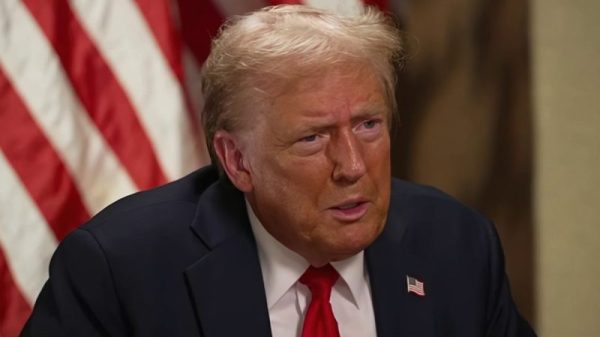
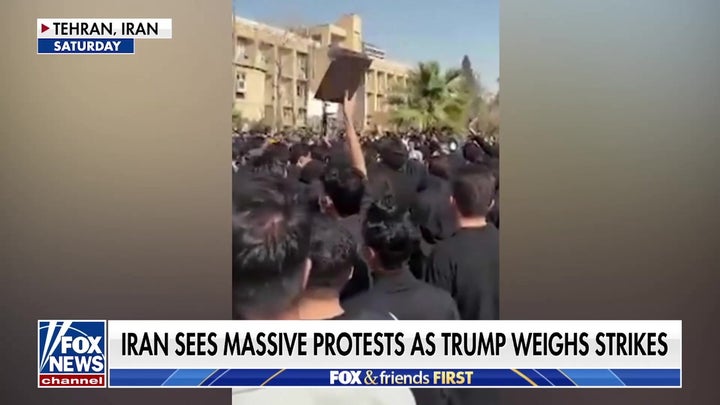
The department did not offer any details for the reason behind the evacuation. The move comes as President Donald Trump has ordered a large buildup of forces in the Middle East and made threats against the Iranian regime.
‘The Department of State has ordered the departure of non-emergency U.S. government personnel and eligible family members from U.S. Embassy Beirut,’ the State Department said.
‘We continuously assess the security environment, and based on our latest review, we determined it prudent to reduce our footprint to essential personnel. The Embassy remains operational with core staff in place. This is a temporary measure intended to ensure the safety of our personnel while maintaining our ability to operate and assist U.S. citizens,’ the statement continued.
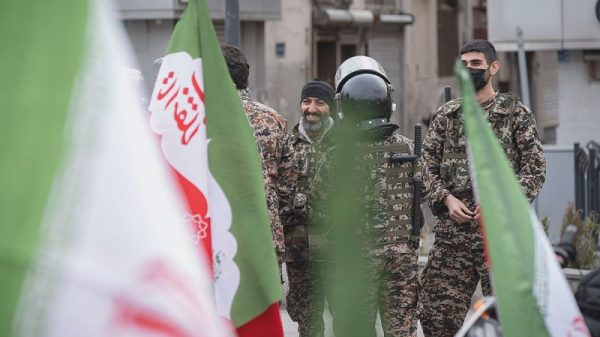
Iran’s Islamic Revolutionary Guard Corps (IRGC) has tightened control over Hezbollah in Lebanon amid looming prospects of potential U.S. strikes, according to reports.
According to the Jerusalem Post, the tactical shift comes as Hezbollah and Iran prepare for military confrontation in the region, with analysts warning that if Washington specifically strikes the regime, Hezbollah is ready to be ‘activated.’
‘If the regime in Tehran feels threatened, the likelihood of unleashing Hezbollah against Israel and U.S. regional assets increases substantially,’ Ross Harrison, a senior fellow at the Middle East Institute, told Fox News Digital.
‘Hezbollah would not be activated right away, unless the attack immediately targets the leadership of the Islamic Republic. But as part of a graduated response, Hezbollah will likely be seen as an asset,’ he said.
‘If it faces an existential risk, then Iran may throw caution to the wind and try to deploy Hezbollah to the maximum,’ Harrison, author of ‘Decoding Iran’s Foreign Policy’ explained.
Trump previously gave Iran a deadline of 10 to 15 days to respond to a deal, raising questions about what steps Washington could take if Tehran fails to comply.
A new round of talks is now scheduled for Thursday in Geneva and expected to focus on Iran’s nuclear program, including uranium enrichment levels and sanctions relief.
‘The decision-making circle in the White House is very small regarding Iran, with the president keeping a close hand on it all,’ Harrison explained.
He added that any decision to directly target the Iranian regime would likely rest within Trump’s inner circle of advisers.
This is a developing story. Check back soon for updates.