







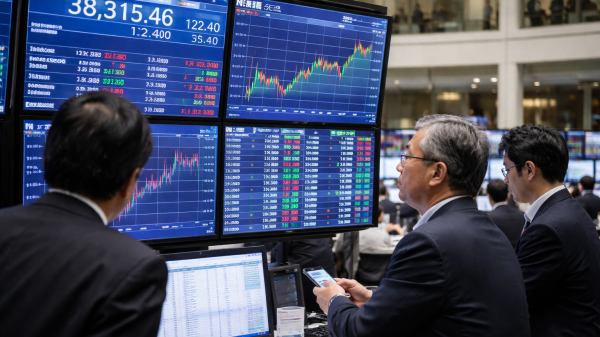
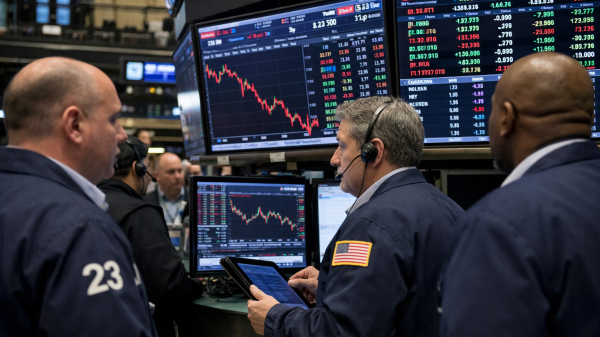


Friday started as a volatile end to the global markets as investors grappled with the economic fallout from the escalating conflict in the Middle East.
Asian equities headed for their sharpest weekly decline in years although some have recovered while oil prices surged, reflecting concerns about energy supply disruptions and rising inflation.
Political developments in Washington and the Gulf region added further uncertainty, while cryptocurrency markets also showed signs of strain after Bitcoin failed to sustain a recent rally.
Asian markets mixed as war fears roil global assets
Asian equities fell on Friday and were on track for their steepest weekly decline in six years as investors reacted to the expanding conflict involving the United States, Israel, and Iran.
MSCI’s broadest index of Asia-Pacific shares outside Japan slipped 0.4% was set to post a weekly drop of about 6.6%, the largest decline since March 2020.
Japan’s Nikkei fell 0.5% but recovered to gain 0.48% but is heading for a weekly loss of 5.7%, while South Korea’s Kospi was on course for its biggest weekly fall in six years with a 11.2% slide.
Markets have been rattled by fears that the war could drag on longer than initially expected, prompting investors to move into safer assets such as cash.
The turmoil has also driven a surge in global bond yields and the US dollar.
Yields on US Treasuries rose roughly 18 basis points this week, their biggest increase in nearly a year, while the dollar was set for its largest weekly gain in 16 months.
Energy markets have been among the most affected.
Brent crude traded around $84 per barrel, up sharply from about $69 a week earlier, while US crude briefly hit a 20-month high earlier in the week.
Trump signals tougher stance on Iran leadership
The geopolitical backdrop remains a key driver of market volatility.
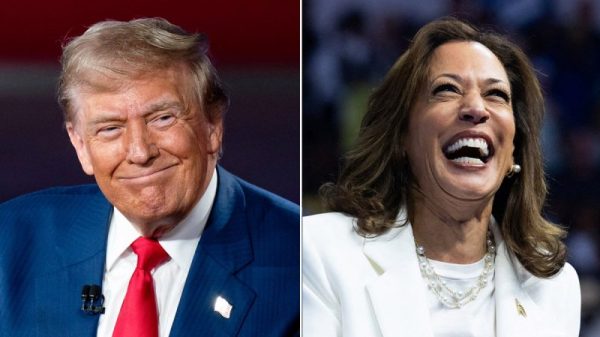
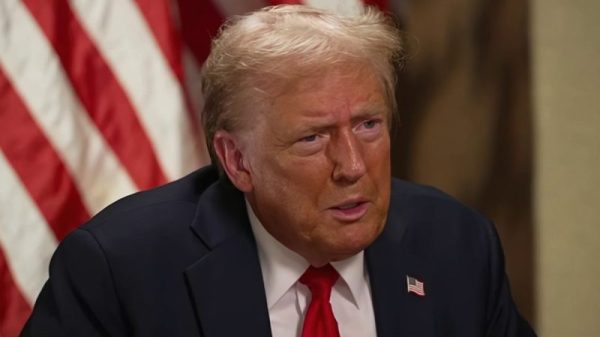
US President Donald Trump indicated he would like to see Iran’s leadership replaced, saying he had potential candidates in mind for the country’s future leadership.
“We want to go in and clean out everything,” Trump told NBC News in a phone call. “We don’t want someone who would rebuild over a 10-year period.”
“We want them to have a good leader. We have some people who I think would do a good job,” he added, declining to name anyone.
Trump also said he was monitoring individuals who could potentially take leadership roles in Iran.
“We are watching them, yeah,” he said.
However, the president downplayed speculation about a possible ground invasion.
“It’s a waste of time. They’ve lost everything. They’ve lost their navy. They’ve lost everything they can lose,” he said.
Meanwhile, Defense Secretary Pete Hegseth said the pace and intensity of US military strikes would continue.
Gulf states review overseas investments amid war costs
The conflict is also creating financial strain across the Gulf region, prompting governments to review investment commitments reported Financial Times.
Officials cited in the report said several Gulf states are examining their overseas investments and contracts as they consider how to manage the economic pressure caused by the war.
“A number of Gulf countries have begun an internal review to determine whether force majeure clauses can be invoked in current contracts, while also reviewing current and future investment commitments in order to alleviate some of the anticipated economic strain from the current war,” a Gulf official said.
The review could affect a wide range of financial commitments, including investments in foreign companies, sports sponsorships and government-backed projects.
Oil production disruptions and rising defense spending are among the factors putting pressure on government budgets.
The war has already disrupted shipping through the Strait of Hormuz, a critical route for global energy supplies.
At least ten tankers have been struck in the Gulf, while Qatar declared force majeure after suspending production at a major liquefied natural gas facility following a drone attack.
Bitcoin rally stalls near $74,000 technical resistance
Cryptocurrency markets also reflected the uncertain macro environment.
Bitcoin surged earlier in the week, climbing from around $64,000 to a peak near $74,000 in just five days. However, the rally stalled and the cryptocurrency pulled back to about $70,369 during Asian trading hours.
Technical analysts pointed to resistance around the 61.8% Fibonacci retracement level and the 50-day moving average as key barriers.
FxPro chief analyst Alex Kuptsikevich said the rejection suggested the rally may have been driven largely by short liquidations.
He noted that “the bulls still have to convince the community that the bear market is over,” adding that the surge was fueled by bears who “pulled their stops too close to the market price.”
Analysts at Bitunix said liquidation clusters now define a potential trading range, with long leverage positioned near $70,000 and additional liquidity pools around $64,000.
The broader macro backdrop remains challenging for cryptocurrencies.
The $70,000 level is now emerging as a key test for Bitcoin.
Holding above it could confirm the recent breakout, while a drop below may put the $64,000 support zone back into focus.
The post Morning brief: Asia stocks slide, Bitcoin retreats from $74,000 appeared first on Invezz