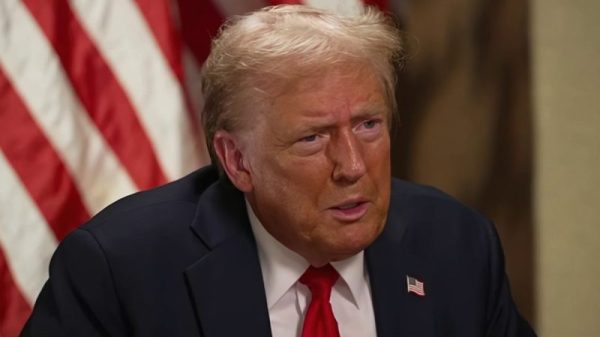









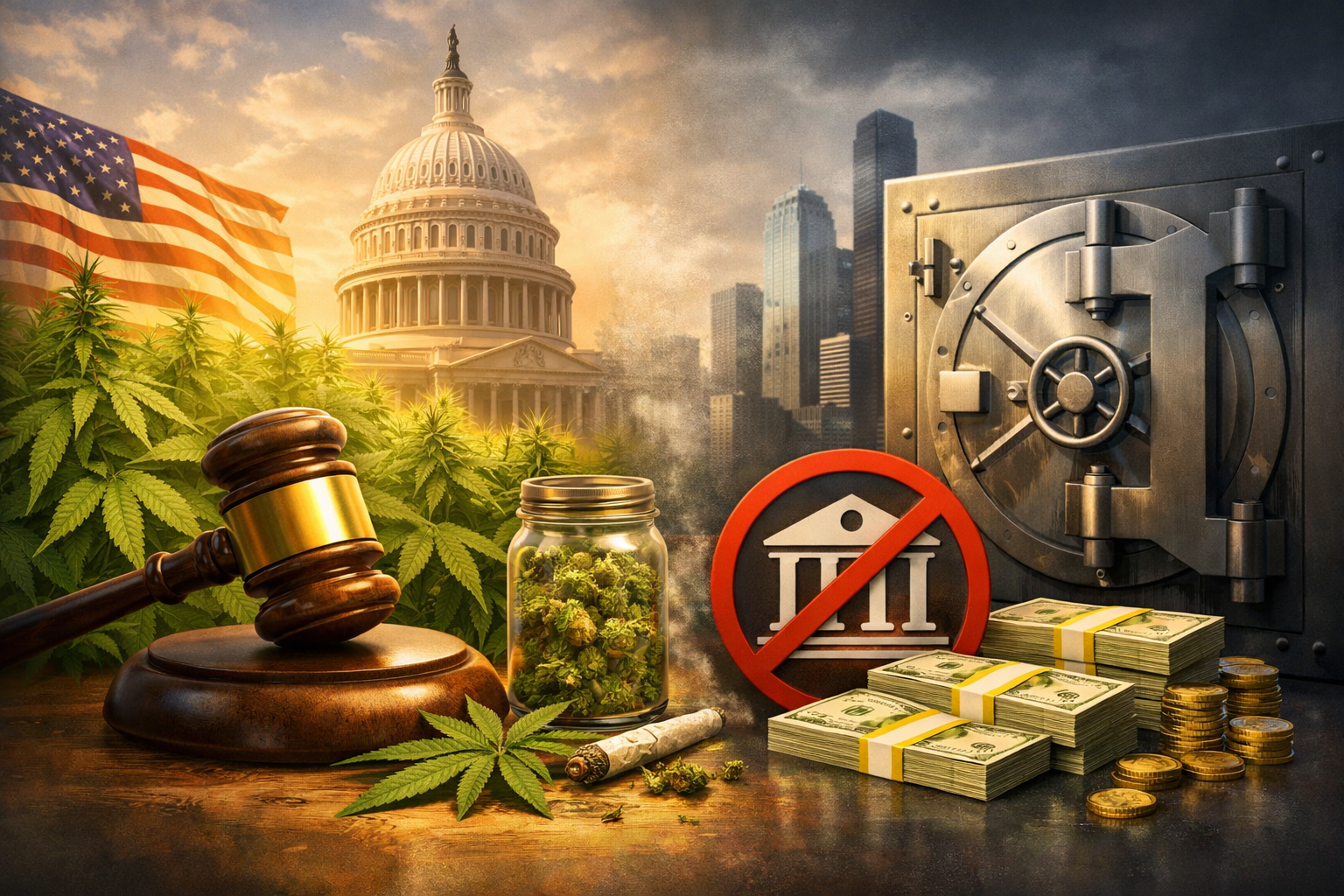

President Donald Trump’s move to relax federal marijuana regulations has been welcomed by the US cannabis industry, but it has not changed the sector’s most persistent challenge.
Access to mainstream banking remains limited, even as regulatory pressure eases, reports Reuters.
The executive order signals a shift in tone from Washington and reduces some compliance burdens, yet it stops short of federal legalization.
For banks, that distinction matters.
Industry specialists say the policy change improves operating conditions for cannabis companies but does little to alter how major lenders assess risk in a sector that remains federally restricted.
A regulatory reset, not legalisation
Cannabis companies have struggled with financing for years, despite operating legally in many US states.
During the industry’s early boom, investor interest surged, but access to traditional bank lending never followed.
Most operators continue to rely on smaller banks, credit unions, or alternative lenders, which often charge higher rates and impose stricter conditions.
Trump’s executive order seeks to speed up a review that would ease federal restrictions on cannabis research.
This could open the door to new medical marijuana products and lower some compliance costs tied to federal oversight.
The reclassification of cannabis as a controlled substance is widely seen as a positive step, as it removes certain layers of red tape that have weighed on the industry.
However, cannabis would still be treated as a controlled substance at the federal level.
Its use would remain subject to strict regulation and criminal penalties, limiting how far the policy shift can go in practice.
Why big banks remain cautious
For large US banks, the issue is not regulatory complexity but legal certainty. Even with reclassification, lending to cannabis companies continues to carry federal risk.
According to Reuters, financial institutions that are federally regulated or rely on FDIC insurance remain cautious about activities that could expose them to compliance or enforcement concerns.
Industry experts say the policy shift is unlikely to materially change the behaviour of major lenders.
While reclassification reduces friction for cannabis operators, it does not remove cannabis from federal drug control frameworks.
As a result, banks see little reason to revise internal risk policies or expand lending to the sector.
The same logic applies to treasury services and payment processing.
Without clear federal legality, large institutions remain reluctant to engage deeply with cannabis-related businesses.
Limited room for smaller lenders
Some movement may occur outside the largest banks.
Market participants suggest that a handful of regional or technologically focused banks could move closer to the sector, particularly as compliance obligations ease.
These lenders may be more willing to explore cannabis-related opportunities, especially in states with established legal frameworks.
Even so, any shift is expected to be gradual.
The core constraints remain unchanged, and the absence of federal legal clarity continues to shape how lenders evaluate exposure to cannabis businesses.
Industry pushes Congress for clarity
Most major US and Canadian banks have not signalled any change in their stance following Trump’s policy shift, with several directing enquiries to the American Bankers Association.
The association has reiterated its call for Congress and the administration to pass the bipartisan SAFER Banking Act.
The legislation would provide financial institutions with legal certainty to offer banking services to cannabis and cannabis-related businesses in states where marijuana has been legalized.
Until such legislation is passed, analysts say policy adjustments alone are unlikely to unlock access to capital from major banks.
For now, cannabis companies may benefit from lower compliance costs and improved research access, but the broader financing gap remains firmly in place.
The post Why US banks are still wary of cannabis despite Trump’s policy shift appeared first on Invezz